loader

Blog

Ultrasound – more and more possibilities

Recent years have seen very intensive development of the technologies used in ultrasound devices. The direction of development in ultrasound technology is, on the one hand, to improve the quality, speed and accuracy of imaging and, on the other hand, to minimise costs as far as possible. Recent years have seen very intensive development of the technologies used in ultrasound devices. The development of ultrasound technology is aimed, on the one hand, at improving image quality, speed and accuracy and, on the other hand, at minimising costs as far as possible. The leading equipment manufacturers are setting the pace for changes in market standards and are improving their equipment almost every year. Progress in ultrasound technology has never been as dynamic as it is today. The main areas of development are increasing the sensitivity and range of imaging of the transducers, introducing multiple systems for forming the ultrasound beam, increasing the number of process channels and significantly increasing the image processing speed. Manufacturers are focusing on improving the devices on the one hand and developing increasingly advanced specialised software on the other, which significantly expands the possible applications of the devices. What should you look out for? The most important parameter is obtaining an image with the highest possible diagnostic value, so it is worth selecting devices based on the principle of "highest image quality in the shortest time". Better imaging is achieved when the devices use compound imaging technology, which involves crossing and merging ultrasound waves at different angles. The 2D images obtained in this way are clearer and have better-defined tissue boundaries. It is worth paying attention to the number of processing channels – the higher the device class, the more channels. In addition, the operating modes of the ultrasound device and the functions available in each mode (e.g. edge smoothing, better contrast), the number of transducer connections, their functional range, the possibility of purchasing additional transducers, and their compatibility with the device are also important. Other important factors include user-friendliness, intuitive and understandable software, additional functions such as data archiving and the option to export data to external storage media, as well as the option to connect the device to a computer network. There are situations, usually in a clinic or hospital department, where several different diagnosticians use the same ultrasound device. In such situations, it is important that the device is relatively mobile in case it needs to be transported to another room. The ability to customise the settings for each user can also be very helpful. Miniaturisation and the introduction of new useful functions for 3D probes have led to these slowly replacing 2D probes in routine examinations. However, if 2D probes appear to be sufficient, it is enough to equip the device with an application for generating 3D images from connected 2D heads. You can purchase volumetric heads for 3D/4D imaging at any time to expand the diagnostic capabilities of your device. The latest technologies to have conquered the Polish market in recent years are volume and tomography imaging, the combination of imaging and navigation, and traditional and virtual echastography. Soon, functions for eliminating noise and artefacts caused by blood flow or fatty tissue, as well as panoramic imaging technology, i.e. the construction of images that extend beyond the penetration range of the transducers, will become standard. Advantages and disadvantages of portable ultrasound devices High-quality portable devices have only appeared on the Polish market relatively recently, namely a few years ago. When deciding on a portable version, it is essential to pay attention to image quality. Unfortunately, the reduction in size of the devices sometimes comes at the expense of the most important characteristics of ultrasound devices – the speed and accuracy of imaging. Even the highest-quality portable devices cannot match the advanced parameters of stationary devices. Mobile ultrasound devices are used where fast and efficient examination is required and where transporting a stationary device is significantly more difficult or even impossible. Mobile ultrasound devices are particularly suitable for emergency rooms, general practitioners and internists, intensive care units, operating theatres and anywhere else where the doctor has to travel to the patient with their device. Mobile devices are cheaper than stationary ones, but at the same time have relatively fewer options. When choosing a mobile version, the primary consideration should be image quality, so it is worth testing devices from different manufacturers before purchasing. You should also consider the intended use of the device and how often it will be used. The more examinations are performed with the device, the more transducers are needed and the more expensive the device becomes. If you buy a device, choose one with at least two probes and a working range of at least 12 MHz, as well as harmonic imaging technology. You may also consider a device with the so-called colour Doppler option, but such devices can be up to five or six times more expensive than the cheapest basic version. It is important that the device is easy to transport – it should be lightweight (weighing no more than 7-8 kg) and start up quickly and efficiently. Also consider the battery life – currently, a minimum operating time of one hour without an external power supply is standard. Miniaturised ultrasound devices are coming onto the market. These palm-sized devices fit easily into a coat pocket and can therefore be taken anywhere. Although the scope of possible examinations does not currently extend beyond basic diagnostics, they are ideal for emergency cardiology, for example, for quickly assessing the condition of the heart. Author: Medical Online 19.09.2012
19September 2012

Which autoclave class to choose – brief description.

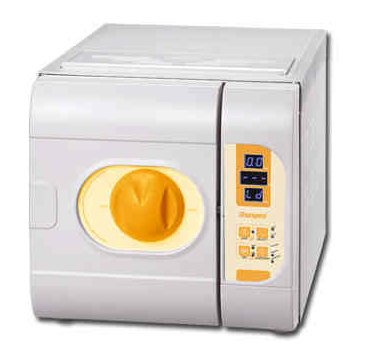
In some medical facilities and laboratories, the use of sterile disposable instruments is now standard practice, but there are still a number of reusable instruments that need to be sterilised. When deciding to purchase an autoclave, two important aspects should be considered. Firstly: In what type of facility will the steriliser be used? Which autoclave class should be selected, i.e. a brief description of the equipment for pressure sterilisation with steam In some medical facilities and laboratories, the use of sterile disposable devices is now standard practice, but there are still a number of reusable devices that need to be sterilised. When deciding to purchase an autoclave, two important aspects should be considered. Firstly, in which facilities will the steriliser be used? Secondly, we must ask ourselves what type of material we will be sterilising and what it is intended for. Sterilisers that use hot steam under pressure as a sterilising agent, or autoclaves to put it simply, can be divided into three classes. The highest class, Class B autoclaves, includes devices that can sterilise all types of materials, especially capillary instruments, which pose particular problems during autoclaving (so-called type A loads). The distinguishing feature of these devices compared to the others is the so-called fractionated pre-vacuum. This involves completely removing the air from the material to be sterilised by creating a vacuum and injecting steam several times in succession during the initial phase of the process. This is currently the best and most effective technique available, guaranteeing the sterilisation of virtually all types of products. Class B autoclaves are commonly used in clinical facilities and hospitals, as well as in doctors' surgeries. One step below in the classification are Class S autoclaves, which are mainly intended for use in laboratories and doctors' surgeries where no equipment classified as Type A batches is sterilised. Here, too, the autoclave is designed to be used in a controlled environment.for use in laboratories and doctors' surgeries, where no equipment classified as type A batches is sterilised. Here too, the air is evacuated from the chamber before the actual sterilisation process begins, but this process is much less complex than withThe vacuum is created using a small pump, but this process only takes place once. Another point to consider when selecting equipment is its ability to effectively dry the batches, especially the packaged ones. We should consider whether the microbiological purity of the materials or packaged items can still be guaranteed if they are damp. Class B and S devices use vacuum drying, which makes this process very efficient and smooth.and allows us to remove a completely dried, ready-to-use insert from the autoclave after sterilisation is complete. The lack of effective drying is a major problem. We encounter it in autoclaves of the lowest class N. These are primarily intended for the sterilisation of simple, unpackaged materials. The manufacturers recommend starting an additional drying programme after opening the device, but this is sometimes difficult and the sterilisation is not always completely successful.However, this can sometimes be difficult and the sterility of the batch sometimes remains controversial. The principle of vacuum generation is slightly different here than in class B and S sterilisers. The thermodynamic vacuum system, which is based on the self-acting effect of water vapour that pushes the air out, is very common. Unfortunately, this process is unevenand only allows for the sterilisation of solid instruments. Although Class N autoclaves have lower functional properties in terms of the types of batches that can be sterilised, they are characterised by a high technical standard. If we pay attention to the correct composition of the batch and additional drying, these devices will serve us with high efficiency. When considering the technical parameters, several aspects must be taken into account. The first of these is the capacity of the chamber.considering the technical parameters, several aspects must be taken into account. The first of these is the capacity of the chamber, bearing in mind that the performance of the device is determined by its so-called useful volume, i.e. the actual space that the batch can occupy.¤chlichen Raum, den die Charge einnehmen kann. This is always a few to several percent smaller than the physical dimensions, which is due to the fact that the sterilising agent must have sufficient space to reach all components of the batch equally.In classes B and S, we are usually dealing with chambers with a capacity of 4.8 l to 24 l. Sometimes there are even values of up to 65 l for the sterilisation of large quantities of material. In class N, the size range of the chamber is similar, with manufacturers usually offering autoclaves with a capacity of several litres. Another important parameter is the limits of the programmed temperature. The most common range is between 117 °C and 134 °C, but there are also devices where the scale starts below 100 °C. This is of great importance, as it allows sterilisation programmes to be created that are optimally tailored to individual requirements. With most devices available on the market,In medical facilities, autoclaves of the two highest classes are the most popular. Depending on the manufacturer, the following options are standard or available as extras:

  • generated with a vacuum pump: pre-vacuum, fractionated vacuum and drying,
  • control of all functions via a microprocessor,
  • Chamber and frame made of stainless steel,
  • Intake air filter to protect the batch from microbial contamination,
  • automatic electromagnetic closing of the door after the start of the cycle, which means that¤hring the programme, no material can be added and at the same time protects personnel from accidentally opening the autoclave when there is high pressure in the chamber,
  • fixed sterilisation programmes, test programmes + additional option to create your own sequences,
  • Error alarms,
  • Automatic water intake and drainage
  • Integrated printer
  • Connection option to a computer or portable memory card,
  • Additional work, cassettes or other containers for sterilised material.

Author: Medical Online 19.09.2012

19September 2012

Who purchases rehabilitation and physiotherapy equipment?

It can be said that rehabilitation is currently used in the treatment of diseases in almost all medical fields. Awareness of the importance of early rehabilitation and physiotherapy for effective treatment has led to its widespread use. Who buys equipment for rehabilitation and physiotherapy? It can be said that rehabilitation is currently used in the treatment of diseases in almost all medical fields. Awareness of the importance of early rehabilitation and physiotherapy for effective treatment has led to their widespread use. Demand for such services is growing, leading to the establishment of new practices, departments and even entire institutions specialising in these areas. The equipment of rehabilitation and physiotherapy centres depends primarily on the scope and type of diseases treated in the respective facility. In addition to basic equipment (beds, mattresses, ladders, rotors and rehabilitation couches), every good centre should have equipment for electro-, magnetic and laser therapy, IR or IR/UV lamps, ultrasound devices and laser biostimulation devices. Devices for hydrotherapy (e.g. whirlpools) and cold treatment (cryochambers, cryosaunas) are becoming increasingly popular and are increasingly found in practices. Both public and private institutions are keen to purchase new rehabilitation equipment. These are relatively inexpensive and allow for easy expansion of the range of treatments offered. As already mentioned, rehabilitation and physiotherapy are increasingly being used in the treatment and prevention of many diseases. This is leading to intensive development of the equipment market. Manufacturers and distributors offer a very wide range of equipment – buyers are sure to find something that meets their needs. The situation is slightly different for physiotherapy equipment. This is mainly purchased by public institutions. Why? For two reasons. Firstly, because patients need them, and secondly, because owning physiotherapy equipment is one of the requirements that rehabilitation facilities must meet in order to sign a contract with the National Health Fund (NFZ). Private facilities that are not affiliated with the NFZ invest in such equipment much less frequently, but they do invest in it, mainly due to market demand. The investment in physiotherapy equipment pays for itself quite quickly. The prices for the equipment are not excessive – they range from a few thousand to around PLN 30,000, with Polish equipment generally being cheaper than foreign equipment. In fact, this is only a small fraction of the cost of equipping a rehabilitation practice, and it significantly increases the number of services offered. Physiotherapy treatments are considered methods to support rehabilitation. Experts unanimously emphasise that although physiotherapy is not always used, it is a good complement to manual or neurological therapy. It shows visible results in the treatment of scars, pain or inflammation. When it comes to rehabilitation and physiotherapy equipment, you should not skimp on quality. As is well known, the equipment in the rehabilitation department is used very intensively. Therefore, the durability of the materials from which the components are made, ease of use, ergonomics and trouble-free operation are of paramount importance when purchasing. Author: Medica Online