

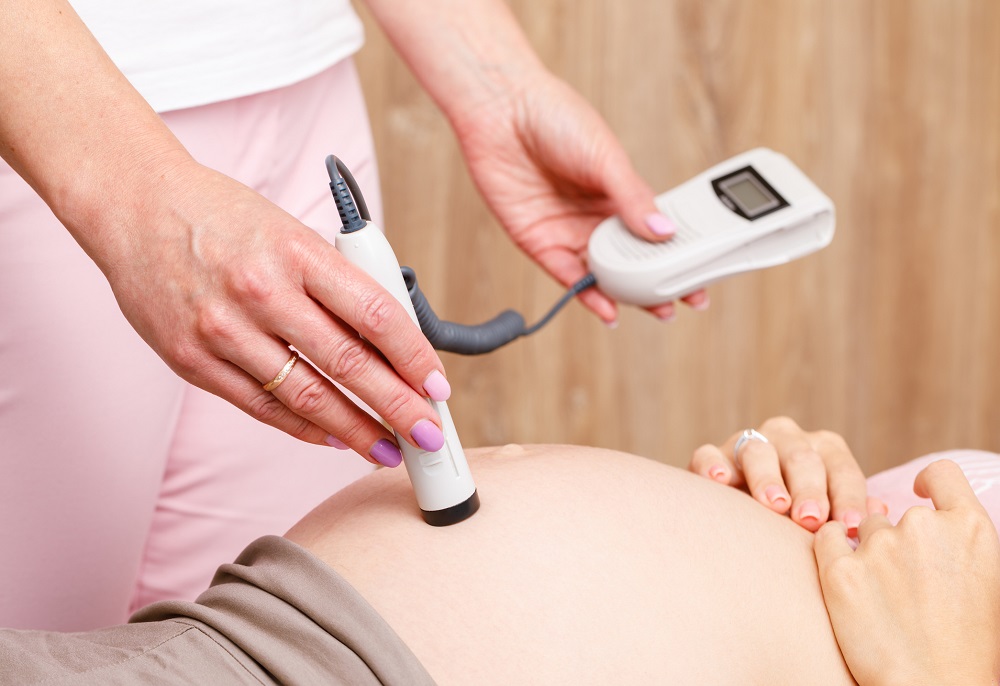
The device for measuring foetal heart rate is increasingly being purchased not only by gynaecologists and midwives, but also by expectant mothers. Its use is somewhat reminiscent of the CTG (cardiotocography) examination performed by a midwife in a gynaecological clinic. With the detector, expectant mothers can listen to their baby's heartbeat and monitor their pregnancy more closely from the comfort of their own home. How the heart rate monitor works The heart rate monitor is a small and easy-to-use device. Before use, the expectant mother should apply a small amount of ultrasound gel to the skin of her abdomen. She then needs to place the probe on her stomach to determine the baby's heart rate. This task requires patience – the baby moves and turns in the womb, so the position of the transducer may be different every day. The detector emits ultrasonic waves and uses the Doppler effect. The waves bounce off the tissues and are converted into electrical impulses and then into sounds. Of course, the mother needs to find out which signs are correct at each stage of pregnancy. Hearing the baby's heartbeat in the womb is a source of great excitement for both parents. More importantly, however, it can detect abnormalities and risks so that the expectant mother can consult her doctor without unnecessary delay. Of course, even the best heart rate monitor is no substitute for regular visits to a specialist. How to choose a detector? Regardless of whether you are buying a heart rate monitor for home use or for your midwifery practice, you should always make sure that it is registered in the medical device register. It is best to choose a device that is safe for the foetus and emits a low dose of ultrasound. Make sure that the device comes with a warranty. A handy detector should be small and easy to store. The device should provide immediate measurement results. Devices from reputable manufacturers come complete with gel and a storage bag for the detector and batteries. When is it worth buying a detector? Most mothers do not hesitate to buy a detector – a home CTG test can be performed from the 9th or 10th week of pregnancy.


