

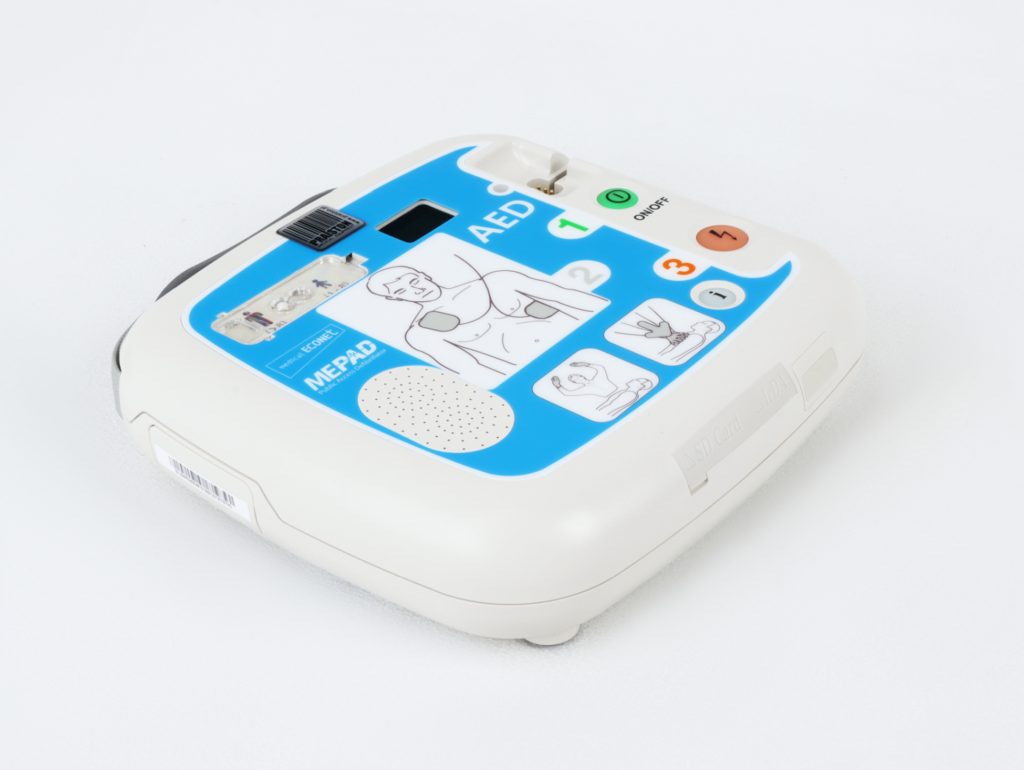
Why are technical inspections of AED defibrillators so important?
Automatic external defibrillators (AEDs) are life-saving devices in the event of sudden cardiac arrest (SCA). Their main function is to detect cardiac arrhythmias and, if necessary, deliver an electrical shock that can restore normal heart function. However, for an AED to work effectively at a critical moment, it must be in perfect working order. Regular inspections and maintenance ensure that the device will work when it is most needed.
Automatic external defibrillators (AEDs) are life-saving devices in the event of sudden cardiac arrest (SCA). Their main function is to detect cardiac arrhythmias and, if necessary, deliver an electrical shock that can restore normal heart function. However, for an AED to work effectively at a critical moment, it must be in perfect working order. Regular inspections and maintenance ensure that the device will work when it is most needed.
What does the technical inspection of an AED involve?
- Checking the charge status
- Battery: The charge status and expiry date of the battery are checked. Used or unusable batteries must be replaced with new ones that comply with the manufacturer's recommendations.
- Emergency power supply: Some AED models are equipped with additional batteries. Their functionality should also be checked during the inspection.
- Checking the condition of the electrodes (defibrillation electrodes/pads)
- Expiration date: Electrodes have a specific shelf life. After this period, they may no longer conduct the electrical impulse properly.
- Physical damage: Check that the electrode packaging is undamaged and that the conductive gel has not dried out.
- Correct connection: Ensure that the cables and connectors are in good condition and can be connected to the AED without any problems.
- Functional tests of the AED
- Self-test: Most modern AEDs perform self-tests, including checking the charging system and capacitor. It is advisable to check that the device reports the result of such a test correctly (usually by means of an LED or an audible signal).
- Software and protocols: During the check, it is also recommended to check the version of the device's internal software (firmware) and, if the manufacturer has released updates, to perform an upgrade.
- Visual inspection
- Housing and display: Check for cracks, dents or other damage that could affect the tightness and function.
- Cleanliness: The device should be free of dirt, dust or moisture that could impair the function of the mechanisms.
- Additional components: If the AED is equipped with a ventilation mask, scissors or disposable gloves, ensure that their expiry date has not passed and that the accessories are in perfect condition.
- Verification of compliance with documentation and recording of results
- Manufacturer's instructions: The manufacturer specifies how often and how the check must be carried out. Detailed instructions can be found in the device's operating manual.
- Documenting results: After completing the check, a log should be created or a check card filled out. This makes it easier to track the maintenance history of the respective device and documents compliance with procedures if necessary.
Frequency of inspections and responsibility
- Regular checks: It is generally recommended that checks be carried out every 6 or 12 months, depending on the manufacturer's recommendations, the intensity of use and the storage conditions of the device.
- Ongoing monitoring: The person responsible for the AED in the facility (e.g. hospital, government agency, school) should regularly (even daily or once a week) check the device's status indicators – whether the LED signals operational readiness and whether there are any error messages on the display.
- After use: After each use of the AED in an emergency situation, a complete inspection of the device, replacement of the electrodes and, if the battery is depleted, refilling or replacement is required.
Why is this so important?
- Safety of the rescuer and the injured person A device
that is not fully functional can prolong the time it takes to deliver the rescue pulse or lead to an incorrect analysis of the heart rhythm, putting the life of the injured person at risk. - Reliability in critical
situations Sudden cardiac arrest requires an immediate response. Any delay or device failure can determine whether the injured person's vital functions can be restored. - Legal responsibility
In some countries and industries (e.g. airports, certain public institutions), there are regulations that require the possession of an operational AED. Neglecting inspections can have legal and financial consequences. - Image of the facility
Owning and maintaining a fully functional AED demonstrates responsibility and care for the safety of customers, patients or employees. A lack of regular maintenance can have a negative impact on the image of the facility.


